Market intelligence
How global seafood markets are shaping salmon export strategy
Buyers don't need another container. They need a supplier who understands where their market is going.
Supply chain
Buying from the plant that owns the fish looks like the shortest path. It usually is, until the week your market moves and the plant is running something else. The difference between a single origin and a network shows up in the same place every time: how much of your capital is sitting frozen in a cold store.
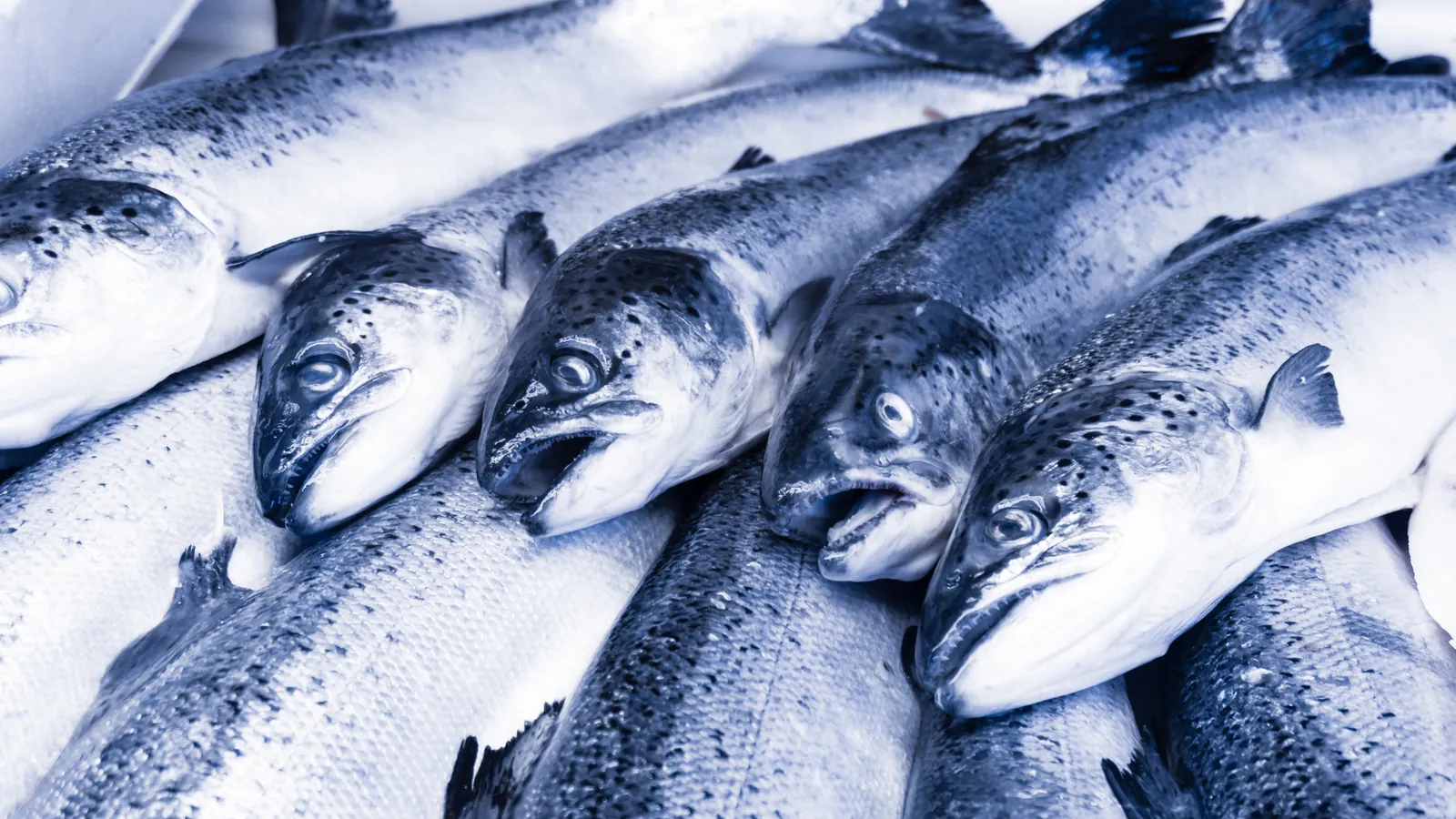
A forty-foot reefer holds roughly twenty tonnes. Bought from one producer, that container is typically one or two products. If your customers buy ten, you are either running ten containers at once or you are out of stock on eight of them. Both outcomes cost money, and the second one costs customers.
The usual workaround is to order the fastest-moving item in volume and let the rest wait. That works until the slow items are the ones a key account asks for. At that point the exporter's constraint has quietly become the importer's assortment.
A single plant sells what it runs this week. A network sells what your market needs this quarter.
Working across five salmon farms and three processing plants changes what can be put inside one container. Instead of twenty tonnes of a single stock-keeping unit, the same container can carry up to ten products across Atlantic salmon, Coho and rainbow trout, in whole, fillet, portion, block or value-added formats.
This is not an argument that consolidation always wins. If you buy one product in full-container volume, month after month, with no assortment risk, buying direct from the producer is simpler and usually cheaper. The network earns its place when the assortment is wide, the volumes per item are below a container, or the demand is hard to forecast more than a quarter out.
Most importers we work with are in the second situation and were treating it as the first, which is why their cold store was full of the wrong thing.
Ask how many origins the exporter can actually draw on, and what happens to your programme if one of them is short. Ask whether the products you want can share a container and what the minimum is per item. Ask who holds the specification when the producing plant changes mid-programme. The answers separate an exporter with a network from a trader with a phone.
We move roughly two thousand tonnes a year this way: five farms, three plants, one commercial partner, and a container built around what your customers buy rather than around what a plant happened to run that week.
Up to ten in our programmes, across Atlantic salmon, Coho and rainbow trout, mixing whole fish, fillets, portions, blocks, bits and pieces, and value-added formats. The practical limit is the minimum volume per item and the compatibility of the freezing formats, not the container itself.
The per-kilo handling is somewhat higher than a single-product load. The comparison that matters is total cost of holding inventory: a mixed container usually replaces several single-product containers, so the capital immobilised in cold storage falls far more than the handling cost rises.
With several origins in the network the volume is reallocated to another farm or plant holding the same specification, and the programme ships as planned. With a single origin the usual outcomes are a delay or a substitution the buyer did not choose.
The exporter. In our case SalmonExport holds the specification, agrees the tolerance with the buyer, and coordinates production across the plants so the same written standard applies regardless of which one produced a given pallet.
It depends on the format and the plant's run size, but as a guide, two tonnes per item lets ten products share a twenty-tonne container. Smaller quantities are possible for some formats and are confirmed when the programme is quoted.
Talk to us
We build the container around your customers: up to ten products, three species, one shipment and one commercial partner.
Request a quoteKeep reading
Market intelligence
Buyers don't need another container. They need a supplier who understands where their market is going.
Seafood expertise
Certification is not a logo on a box. It is the set of decisions that keeps a specification stable from harvest to plate.